

International trade goods transported by sea are accounting for 80% according to the United Nations International Conference on Trade and Development, so sea transportation is extremely important. Therefore, in order to ship goods by sea smoothly, you should know the fees and surcharges involved. Join 1ST Shipping to find out the fees and surcharges in the article below.
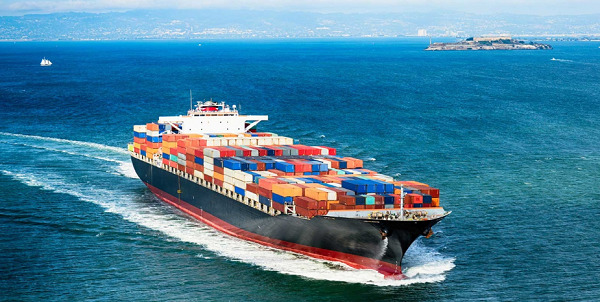
Important fees and surcharges in sea shipping
1. What is O/F (Ocean Freight)?
O/F is sea freight which is the cost of transporting goods from the port of departure to the port of destination.
A method of transporting large quantities of goods, usually packed in shipping containers, by sea.
Mediterranean Shipping Company,
- Maersk Line
- CMA CGM,
- Hapag Lloyd,
- Evergreen Marine,
- MSC
- COSCO
2. Documentation fee
With an export shipment, the shipping lines/Forwarder will have to issue a Bill of Lading (goods transported by sea) and this fee is called the document fee so that the shipping line can make the bill of lading and other procedures. documents for this shipment.
For goods imported to Vietnam, the consignee will have to go to the Shipping Line/Forwarder to get the delivery order and then bring it to the Terminal/Warehouse to receive the goods.
3. What is THC (Terminal Handling Charge)?
THC is known as the loading and unloading charge at the wharf, which is the fee to be collected per container for the purpose of compensating for the cargo handling activities taking place at the port. This fee is regulated by the port, the shipping lines pay first and then collect it from the shippers.
4. CIC (Container Imbalance Charge)
CIC is the imbalanced surcharge for the container, also known as the import surcharge. You may understand that this is a surcharge for the transfer of empty containers. This fee is the sea freight surcharge that shipping lines collect to make up for the cost of transporting empty containers from the place of excess to the place of use.
5. CFS (Container Freight Station fee)
CFS is the fee for an import/export odd shipment, the Consol/Forwarder companies have to unload the goods from the container into the warehouse or vice versa and they collect the CFS fee.

6. Handling Fee (Handling Fee)
HDL is the agent fee that tracks the delivery and transportation of goods as well as the manifest declaration process with the customs authorities before the ship arrives.
7. EBS (Emergency Bunker Surcharge)
A fuel surcharge for shipments to Asia. The EBS fee is a type of ocean freight surcharge. This surcharge will help offset the cost of “lost” due to fluctuations in world gasoline prices for shipping lines.
8. BAF (Bunker Adjustment Factor)
A surcharge (in addition to sea freight) that a shipping company collects from shippers to compensate for costs incurred due to fluctuations in fuel prices.
9. COD (Change of Destination)
COD is the surcharge that the shipping line collects to compensate for the costs incurred in case the shipper requests to change the destination port for example: loading and unloading fee, container storage fee, road transportation, island transfer fee, etc.
10. CAF (Currency Adjustment Factor)
A surcharge (in addition to sea freight) that a shipping company collects from the shipper to compensate for the costs incurred due to fluctuations in foreign exchange rates
The currency adjustment factor (CAF) is an additional cost on trades between the United States and Pacific Rim countries. The levy is imposed by shippers in that region to cover currency fluctuations while goods are in transit and to account for a declining value of the U.S. dollar over time
11. DDC (Destination Delivery Charge)
This surcharge is collected by the ship owner for the purpose of covering the costs of unloading from the ship, rearranging the container in the port and the port entrance fee. Payment of DDC fee will be subject to agreement between buyer and seller.
12. CCF fee (Cleaning Container Free)
Is the container cleaning fee that the importer will have to pay to the shipping company to clean the empty container after the importer has used the container to transport goods and paid at the depot.
13. ISF (Import Security Filing)
A security clearance fee for importers in the United States. In addition to helping to automatically declare US customs information, in January 2010, US customs and US border protection agency officially applied additional security declaration procedures for importers.
14. PCS (Port Congestion Surcharge)
As a port congestion surcharge, this surcharge is applied when the port of loading or unloading occurs congested, which may cause the ship to be delayed compared to its intended duration leading to related costs for the ship owner. .
15. SCS Fee (Suez Canal Surcharge)
As a Suez Canal surcharge, this surcharge applies to goods transported through the Suez Canal.
16. PSS (Peak Season Surcharge)
As a surcharge in the peak season, this surcharge is usually collected by shipping lines during the peak season from August to October when there is a sharp increase in demand for transporting large quantities of finished goods to prepare for shipment. Christmas season and Thanksgiving Day in USA, Europe market.
17. Entry Summary Declaration (ENS)
Is the surcharge for declaring Manifest at the port of destination for shipments to Europe (EU). This is a surcharge for declaration of goods imported into the European Union to ensure security standards for the region.
18. AFR (Advanced Filing Rules)
The fee for electronic Manifest declaration for goods imported into Japan.
19. AMS (Automatic Manifest System)
Is an automatic customs declaration fee for importing countries (usually USA, China). This is a fee to declare details of goods before they are loaded on a ship to be transported to the United States.
20. ACI (Automatic Manifest System)
For security reasons, Canadian customs demand to know the ship’s manifest, including all commodities, 24 hours prior to vessel departure from the port of Loading. This filing is called ACI filing, which stands for Advance Commercial Information.
Above are the fees and surcharges to know in sea transportation. Hope the article of 1ST Shipping is helpful for you!!!