

Binh Dinh promotes the expansion of many ports
According to the Binh Dinh Provincial Plan for 2021-2030 and orientation to 2050, recently approved by the Prime Minister, Binh Dinh will expand and upgrade many ports to vigorously develop logistics and seaports. According to the plan, the province will focus on exploiting the Quy Nhon port cluster while developing the dry port system and optimizing existing port services—research to determine locations and attract investment to build new ports with large capacity and multi-purpose.
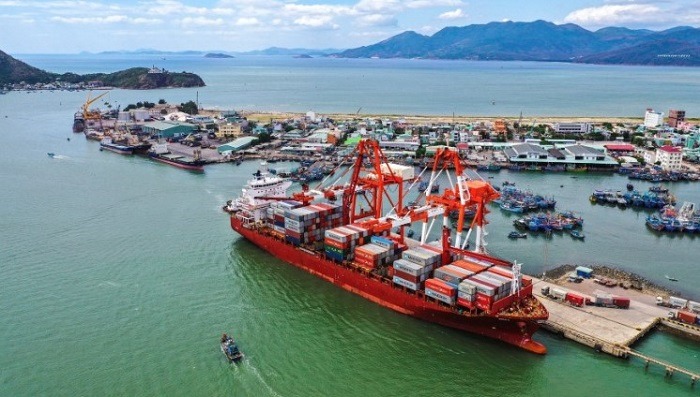
Specifically, Binh Dinh will upgrade, expand, and build ports in the area, including Quy Nhon – Thi Nai – Dong Da Nhon Hoi wharf area. The Quy Nhon port expansion plan will relocate float terminals specializing in liquid cargo in Quy Nhon.
Regarding the function of port areas, the Quy Nhon – Thi Nai – Dong Da area will serve the socio-economic development of Binh Dinh province and the Central Highlands region; Container, general, bulk, liquid/gas terminals and passenger terminals will be constructed. Nhon Hoi port area will directly serve Nhon Hoi economic zone, including container, general, bulk cargo, liquid/gas, and passenger ports.
A notable point in the planning is the study of adjusting and separating Phu My port into two separate areas. These are the Phu My Wharf area (located in My An commune, My Tho, Phu My district) and Hoai Nhon Wharf (in Hoai Nhon town). This study will focus on expanding seaports with favorable conditions and the potential to form integrated port complexes and new energy production and export.
Phu My port area is planned to serve the socio-economic development of Binh Dinh province and surrounding areas. It will include general, container, and specialized terminals for heavy industry, wind power, mechanical engineering, shipbuilding, agricultural products, construction materials, petroleum, and production and export of new energy like hydrogen/ammonium-green…
Hoai Nhon port area is oriented to serve the economic and industrial zone, especially in energy and metallurgy. It will develop local and regional socio-economic development needs while taking advantage of the capabilities and capacity of investors.
Cai Mep – Thi Vai international gateway port becomes an international transshipment port
The Prime Minister has approved the planning of Ba Ria – Vung Tau province for the period 2021-2030 with a vision to 2050, aiming to modernize Thi Vai – Cai Mep international seaport into a regional port. Asia. At the same time, the planning aims to vigorously develop the marine economy and form large-scale complexes in industry, services, and urban areas.
According to the plan, 7 national logistics centers and free trade zones linked to seaports will be established in the Cai Mep Ha area. The goal is to attract strategic investors and build a complete and synchronized ecosystem, complying with leading international standards.
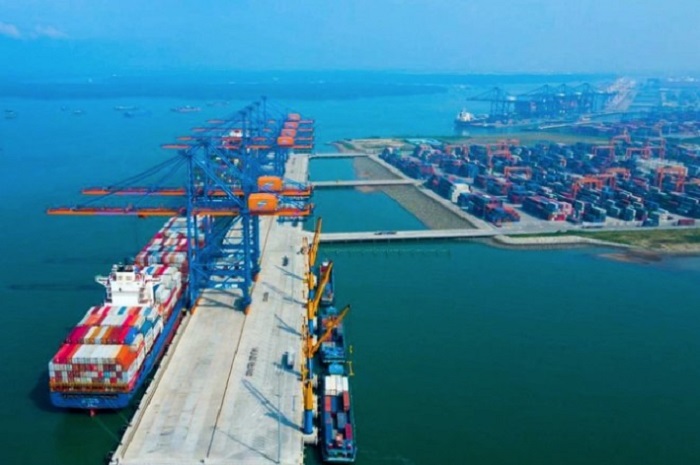
Cai Mep – Thi Vai international seaport will be exploited as a unique national port system in developing the maritime service and logistics industry. It will connect with the Moc Bai economic corridor Ho Chi Minh City – Bien Hoa – Vung Tau and the Trans-Asia economic corridor, acting as the main gateway to the sea of the Southeast region.
In addition, the plan also proposes to build a Cai Mep Ha logistics center on a national and international scale, taking on the role of distributing goods to the region. The close connection between the special national seaport system and Long Thanh International Airport is also emphasized in the planning.
At the same time, to meet the needs of transporting import and export goods and increase the capacity of the seaport system, the locality also proposed the development of a dry port system. Specifically, building dry port clusters in the Ho Chi Minh City – Vung Tau transport corridor, including the My Xuan dry port cluster, Phu My – Phuoc Hoa port cluster, Phu My dry port (Phu My III industrial park), and Phuoc Hoa dry port (Cai Mep dry port).
According to the Master Plan for developing the dry port system in 2021-2030 and vision to 2050, the dry port of Ba Ria – Vung Tau is located on the transport corridor of Ho Chi Minh City – Vung Tau. The dry port throughput capacity on this corridor is expected to reach 530,000-750,000 TEU/year by 2030.
In particular, Phu My dry port will connect with the industrial park road and Cai Mep – Thi Vai inter-port road. The plan predicts that the area of this dry port will be from 30-40 hectares by 2030, and the throughput capacity will reach 300,000-400,000 TEU. The total expected investment for this dry port is about 1,050-1,400 billion VND.
Phuoc Hoa dry port will have diverse connection methods, including the Cai Mep – Thi Vai inter-port road, a waterway connecting to Rach Ong Canal, and Vung Tau – Thi Vai maritime channel. In addition, the dry port will also connect to the Cai Mep area railway terminal according to planning. By 2030, this dry port will have a total area of 15-20 hectares, and throughput capacity will reach 150,000-200,000 TEU/year.